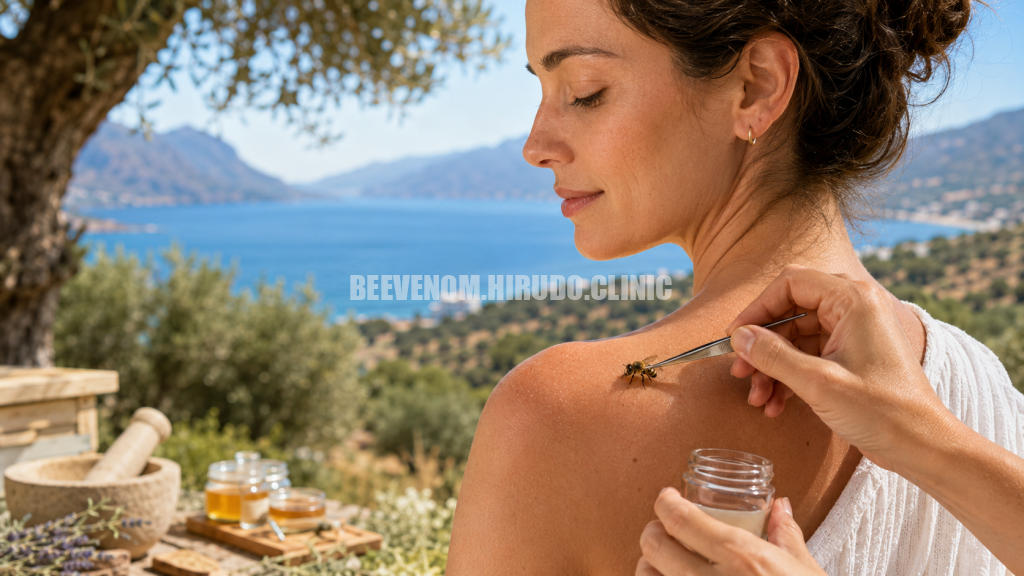
People often use “bee venom therapy” and “bee sting therapy” as if they mean exactly the same thing. They are closely related, but the wording matters for safety, expectations and SEO.
In simple terms, bee sting therapy usually refers to the traditional practice of applying live bee stings to the skin. Bee venom therapy is the wider phrase people use when talking about bee venom, also called apitoxin, in apitherapy settings. Some people explore bee venom therapy in Crete as part of a natural wellness routine, but it should never be treated as a casual home experiment.
Why the wording matters
“Bee sting therapy” sounds direct because it describes the delivery method: a bee sting. “Bee venom therapy” is broader and may include discussion of venom, apitoxin, safety screening, traditional apitherapy and the beehive environment. For a consumer website, bee venom therapy is usually the clearer main term, while bee sting therapy can be explained as a related search phrase.
Safety comes first
Bee venom can trigger allergic reactions in sensitive people. Reactions may be mild and local, but serious allergic reactions can happen and require urgent medical help. Anyone considering this tradition should read about apitherapy safety, discuss allergies honestly, and avoid treatment if there is a known risk that makes bee venom unsuitable.
How it fits within apitherapy
Apitherapy is the wider traditional use of bee products, including honey, propolis, pollen, royal jelly and bee venom. Bee venom is only one part of that picture. It is also the part that needs the most careful screening because it involves venom exposure.
This article is educational and does not claim that bee venom cures, treats or prevents any medical condition. Evidence varies depending on the condition being discussed, and private clients should speak with an appropriate health professional if they have allergies, diagnosed illness, pregnancy, immune concerns or medication questions.